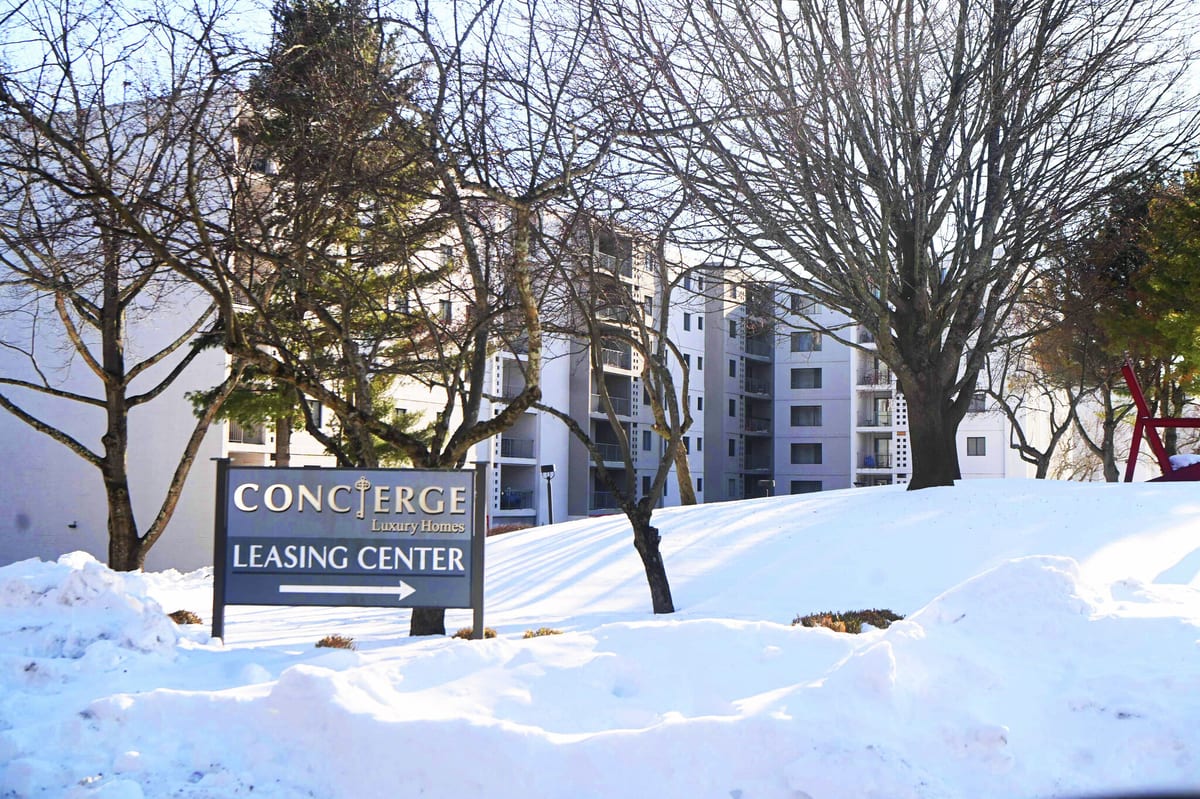
How years of deferred maintenance by a $15B private equity landlord left 544 units condemned in the middle of winter
The Collapse of Concierge: How Corporate Neglect Left 2,000 Connecticut Residents Homeless in Winter
The problems at the Concierge Apartments didn't start with the pipes. They started with the cold.
Residents of the 544-unit complex on Cold Spring Road in Rocky Hill began noticing trouble as early as December 2025. Drafty hallways. Apartments that wouldn't stay warm no matter how high the thermostat was cranked. Electric bills climbing past $400 and $500 a month as tenants tried to compensate for what they now believe was a building with no insulation to speak of.
Then came the January snowstorm — and everything fell apart.
Two Weeks Without Hot Water
Pipes froze and burst across the sprawling five-building complex during a prolonged stretch of bitter cold in late January. More than 300 units lost hot water. At least 100 residents relocated to hotels or found other arrangements on their own. For those who stayed, conditions were grim. Some went days without bathing. Others watched water seep up through shower drains as plumbing systems failed across the property.
Residents say they called management over and over. The response was always the same: "We are aware, and we are working on it."
For ten days, hundreds of people in a complex managed by a company sitting on more than $15 billion in real estate assets went without hot water — in the middle of a Connecticut winter.
An Evacuation in Stages
By early February, the situation had escalated beyond a maintenance failure. More pipes burst overnight into February 6, this time in the fire suppression sprinkler systems in Buildings 400 and 500. The Rocky Hill Fire Marshal and building inspector deemed the structures unsafe. Residents were told to be out by midnight.
The next day, the evacuation order expanded to the entire complex — all 544 units, all five buildings. By February 8, nearly 2,000 residents had been forced from their homes with little more than what they could carry. Families, many with young children, were shuffled into hotels scattered across Connecticut. The town scrambled to secure more than 140 rooms. Some residents were sent as far as Naugatuck — a 40-minute commute from the schools and jobs they still needed to get to every day.
The complex was officially condemned. The Concierge Apartments — owned by Los Angeles-based private equity giant JRK Property Holdings through the subsidiary entity Century Hills Property Owner LLC — had become uninhabitable.
The State Steps In
Connecticut Attorney General William Tong had been watching the situation since the first week of February, after local news reporting exposed the scope of the crisis. On February 4, his office sent a sharply worded letter to JRK Property Holdings demanding answers and action. It was an unusual move — attorneys general rarely intervene in landlord-tenant disputes. But Tong said this crossed a line.
On February 9, he announced a formal investigation under the Connecticut Unfair Trade Practices Act. Standing in front of the damaged complex, surrounded by tarps, debris, and a near-empty parking lot save for a lone U-Haul, Tong laid the blame squarely on the company.
"This crisis did not happen overnight," Tong said. "This is the result of years of callous mismanagement and broken promises."
He noted that the complex had been the subject of multiple code enforcement actions and tenant complaints over the years — including previous losses of hot water, failure to maintain the property, and a history of mold and mildew issues. Tenants reported that lights, elevators, and appliances were routinely out of order and that work orders went ignored.
Within days of his announcement, Tong's office secured several concessions from JRK: a one-month rent credit for all residents, an additional month's credit or the right to break leases without penalty for those who lost water, and reimbursement for out-of-pocket costs including lost food, medications, and child care during the displacement.
JRK, for its part, disputed the severity of the crisis. In a statement released on the evening of February 9, the company claimed that all buildings had maintained heat throughout the ordeal and that only four residents had reported losing it. Repairs to those four units, the company said, were completed within 24 hours.
That claim was met with skepticism by residents and officials alike.
A Slow Return — and New Setbacks
By February 11, two of the five buildings — Buildings D (400) and E (500) — were cleared for reentry. Residents began moving back in, though not all felt safe doing so. The return was not smooth. As residents of Building 500 arrived, the fire alarm was going off; a leak had been found in the sprinkler system.
The other three buildings remained condemned. Hundreds of residents continued living out of hotel rooms.
Then came the labor violations. State labor officials ordered seven contracting companies working on repairs to stop work over workers' compensation issues. The delay injected more uncertainty into an already agonizing wait.
And then, on February 18, Rocky Hill Mayor Allan Smith confirmed what many had feared could be lurking behind the damaged walls: asbestos had been found in at least one of the buildings. The Connecticut Department of Health is now overseeing remediation and disposal. The discovery pushed the reopening timeline for the worst-hit building to at least the first week of March.
JRK has estimated the total cost of repairs at $2 million, covering pipe replacement, sheetrock, insulation, and heat tape installation. No public funds are being used. The company has brought in contractors from out of state to try to accelerate the work.
Lawmakers Walk the Halls
On February 17, the crisis drew federal attention. U.S. Representative John Larson and U.S. Senator Chris Murphy toured the complex alongside Rocky Hill Mayor Allan Smith. What they saw alarmed them.
"This place was in disarray to begin with," Murphy said after the walkthrough. Larson noted that doors were wide open, with no functioning locks or key fob security — in buildings that were supposed to be vacant and under repair. A federal investigation into JRK's practices has been requested.
That same evening, the Rocky Hill Town Council held a meeting with residents invited to speak. The mayor disclosed that JRK had indicated Building C would reopen closer to the end of February, while the building with asbestos contamination would not be ready until at least March. The town manager said he would look into past violations at the complex, noting that issues with mold, mildew, and asbestos had surfaced in individual units before, and that a multi-million-dollar maintenance process had been neglected since 1971.
Also on February 17 and 18, Connecticut state lawmakers — including State Senator Matthew Lesser, whose district includes Rocky Hill — toured the site and pressed JRK for firm repair timelines. None were provided.
A Broader Reckoning
Senator Lesser has framed the Concierge crisis as a symptom of a larger problem: the growing trend of Connecticut's largest apartment complexes falling under the control of distant corporate owners with little local presence or accountability.
JRK Property Holdings manages real estate across 23 states. In Rocky Hill, tenants say communication has been spotty, updates vague, and follow-through inconsistent throughout the ordeal.
The ripple effects extend well beyond the complex's parking lot. Local schools have absorbed displaced students. Social services have stretched to accommodate scattered families. Children have changed schools. Medical appointments have been missed. Routines have been shattered.
Tong's investigation continues. He is pushing for additional tenant reimbursements beyond what has already been secured. The town has not yet announced new housing code enforcement measures, but Lesser's public comments suggest the legislature may consider tightening regulations on out-of-state property owners.
Waiting for Home
As of mid-February 2026, two buildings stand partially reoccupied. Three remain in various states of disrepair — one contaminated with asbestos, all still awaiting the completion of repairs that have been slowed by labor violations, additional pipe bursts, and what officials describe as years of deferred maintenance finally catching up all at once.
Hundreds of residents remain in hotels. Some have broken their leases and left for good. Others are trying to hold on, hoping to return to apartments they're no longer sure are safe.
"We want to go home at the end of the day," one resident told reporters. "And if that means we have to find a new home somewhere else, it is what it is."
Spring is still weeks away. For the displaced families of Concierge Apartments, it has never felt further.
This story is actively developing. Have a tip? Contact The Quinnipiac Post at tips@thequinnipiacpost.com.