
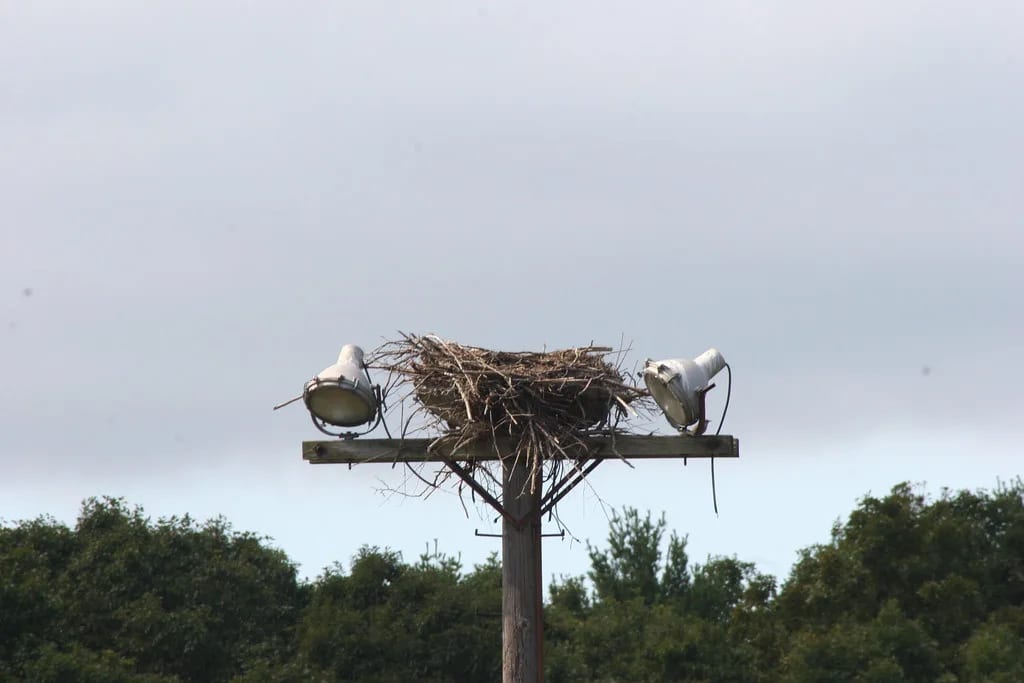
NEW HAVEN, CT — Connecticut Audubon Society reported Tuesday, Oct. 13, that osprey breeding on Connecticut's coast hit a record low in 2026, averaging 0.87 chicks per breeding pair. Matt Joyce, the society's conservation science manager, called the numbers an "unmistakable warning sign."
The 2026 Rate Fell Below a Record-Low 2025
The 2026 figure is down from roughly 1.25 chicks per pair in 2025, which was itself the lowest point in the program's history. NBC Connecticut reported the 2025 number as 1.25, while Connecticut Audubon's own figures put it at 1.26.
Osprey Nation relies on about 450 volunteer stewards who monitor roughly 1,000 current and historical nest sites. This year, 61 percent of observed nests produced just one chick. In the previous 12 seasons of the study, most nests produced at least two. Only 23 nests, or 6 percent, produced three or more chicks this year, while earlier seasons saw up to 20 percent of nests reach that mark.
Nest failure is also climbing. Connecticut Audubon said 40 percent of attempted nests failed this year, meaning they either produced no chicks or saw hatchlings die before they could fledge.
Starvation May Be a Factor in Nest Losses
Starvation is the group’s leading explanation. “The primary hypothesis is starvation of chicks in the nest,” Joyce said. Weather, predators and inexperienced parent birds can also contribute to nest failures. The society said this is the first year its data point to food stress and starvation as likely factors.
A decline in baitfish may be one cause. Ospreys depend on Atlantic menhaden, known as bunker, for food. NBC Connecticut reported that experts say further research is needed to identify what is behind the decline; commercial fishing and changing water temperatures could also play a part.
The adult osprey population in Connecticut still looks relatively strong, NBC Connecticut reported. The concern is whether those adults can feed their young.