
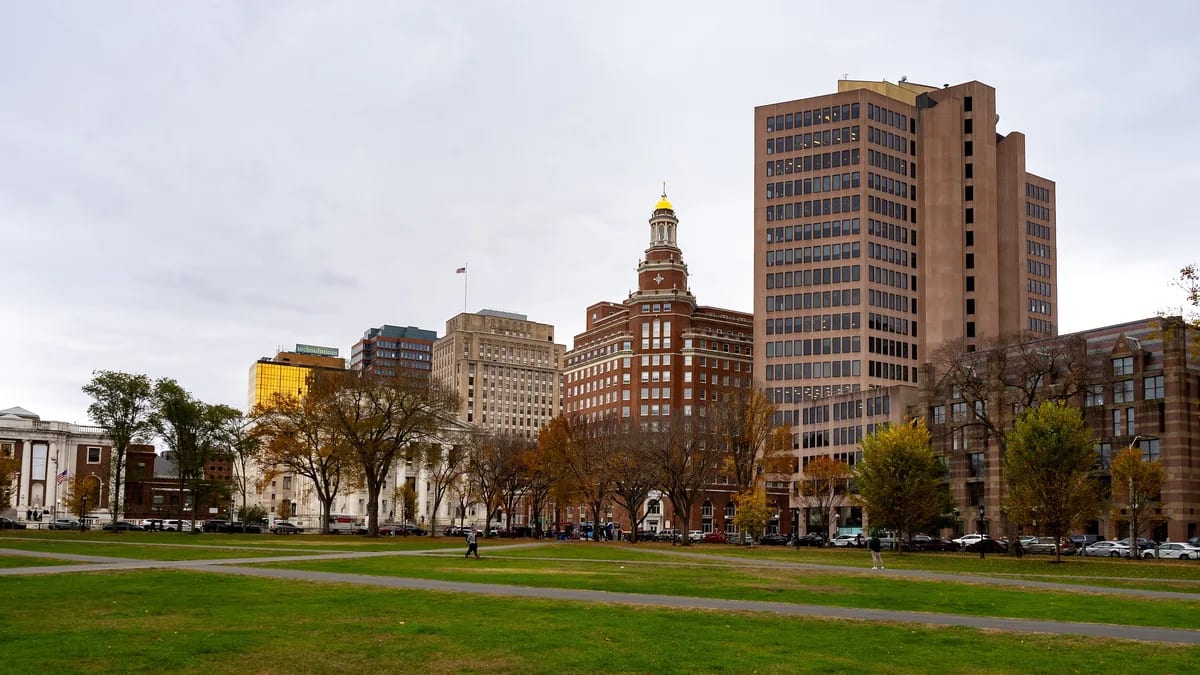
NEW HAVEN, CT — New Haven's Historic District Commission has asked the Elicker administration to hold off on its plans for the Green, including a food kiosk with bathrooms and closing part of Temple Street to cars, calling them "inconsistent" with state and federal preservation guidelines, the New Haven Independent reported Wednesday, Oct. 7.
Mayor Justin Elicker said the city intends to keep going with the plans while it continues to hear from residents.
The commission sent its objections in a six-page memo dated Sept. 15 to the State Historic Preservation Office, to City Engineer Giovanni Zinn and to the Green's legal owner, the Committee of the Proprietors, according to the Independent. Because the Green is a National Historic Landmark, the memo said, work there has to rest on "a full understanding of the identifying characteristics of the Green" and the Secretary of the Interior's Standards for Rehabilitation. The commission wrote that the current concept does not show enough attention to those standards.
What the commission objects to
The plan calls for a food and bathroom kiosk with seating where the Green's pedestrian entrance meets Church and Court streets. The commission pointed out that "no new permanent buildings have been built on the Green for almost 200 years" and called the kiosk, bathrooms and seating area together "a significant and inappropriate change."
It also opposed a proposed row of trees along the brick path to the fountain. The Lower Green has historically had trees only around its edges, the memo said, and the new row "would alter historic sightlines."
Widening the pavement around the fountain and flagstaff would cut into the lawn, the commission warned, and it opposed replacing the Lower Green's asphalt paths with light gray concrete pavers.
On Temple Street, the commission wrote that the block crossing the Green between Chapel and Elm streets should stay open to traffic. The street has run through the Green since 1784, it noted, and its use as a public street is part of the Green's history.
Before any digging or tree planting on the Upper Green, the memo said, a full archaeological study should locate human remains and other artifacts. The commission asked the city to change the plan before it goes to the Connecticut Department of Transportation and the State Historic Preservation Office for review.