
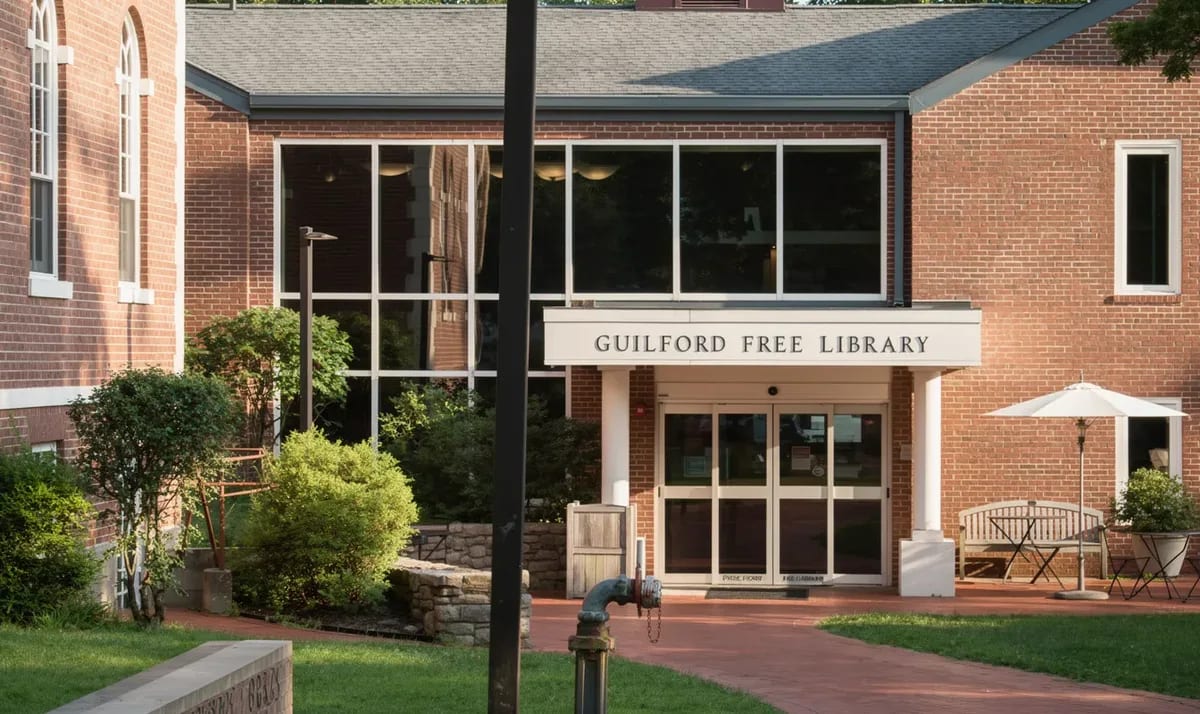
GUILFORD, CT — Guilford voters will find one charter question on the Nov. 3 ballot, and a yes vote would make six changes to how the town elects its leaders and handles its budget. The Board of Selectmen sent the package to voters 4-1 at a special meeting Aug. 24, with Selectman Jonathan Trotta opposed, according to the meeting minutes. Early voting runs from Monday, Oct. 19, through Sunday, Nov. 1.
The question reads: "Shall the Guilford Town Charter be revised as proposed by the Guilford Charter Revision Commission and as approved by the Board of Selectmen at its special meeting of August 24, 2026?"
The Six Changes
Two of the changes concern the Board of Selectmen. Votes for a losing candidate for first selectman would no longer count toward a seat on the board for that candidate, and voters could pick a candidate for every open seat on the board. Trotta said the current rule limits each voter to two.
A third change would let political parties nominate as many candidates for the Board of Finance and the Board of Education as can be elected under the charter's minority representation rules.
The fourth would make the Annual Budget Meeting informational only. Residents at that meeting could no longer make a motion to reduce the budget before it goes to referendum.
The last two are housekeeping: the charter would define a Town Meeting more clearly, and the Board of Selectmen and First Selectman would be retitled the Select Board and First Selectperson.
The Debate at Town Hall
Trotta said the commission was formed in a partisan way: several Republican applicants were never put on an agenda for appointment, and only 11 members were named when state law allowed up to 15. He said the selectmen's election rules were written into the charter on purpose to protect the minority party's seats. He said the shortage of Republicans on the school and finance boards, where voters can already fill every open seat, shows what the change would bring. He also opposed ending the budget-cut motion, saying it takes power from residents. His motion to reject the commission's recommendations died without a second.
First Selectman Matt Hoey said ending motions at the Annual Budget Meeting would give power to voters. As few as 200 people can now cut the budget before the referendum, he said, overriding both the voters who chose the Board of Finance and those who decide the referendum. Selectman Louis Federici said the 200-person threshold made less sense as the town grew and as fewer people could get to weeknight meetings.
On the commission's size, Hoey said people who had served on other commissions told him more than 11 members became unmanageable, and that Democrats, Independents and unaffiliated applicants were also left off the agenda, not only Republicans. Selectman Susan Renner said the nominating change would not stop anyone from petitioning onto the ballot; it covers only the candidates parties nominate through their committees.
In public comment, Gloria Nemczuk said Guilford has 350 Independents and 3,600 Republicans, yet Independents hold more appointed seats on boards and commissions. Nemczuk is the Republican candidate for registrar of voters on the Nov. 3 ballot, according to Patch's voter guide. Commission Vice Chair Howard Sommer said the commission wanted the changes on the midterm ballot because far more people turn out than for a single-issue referendum.