
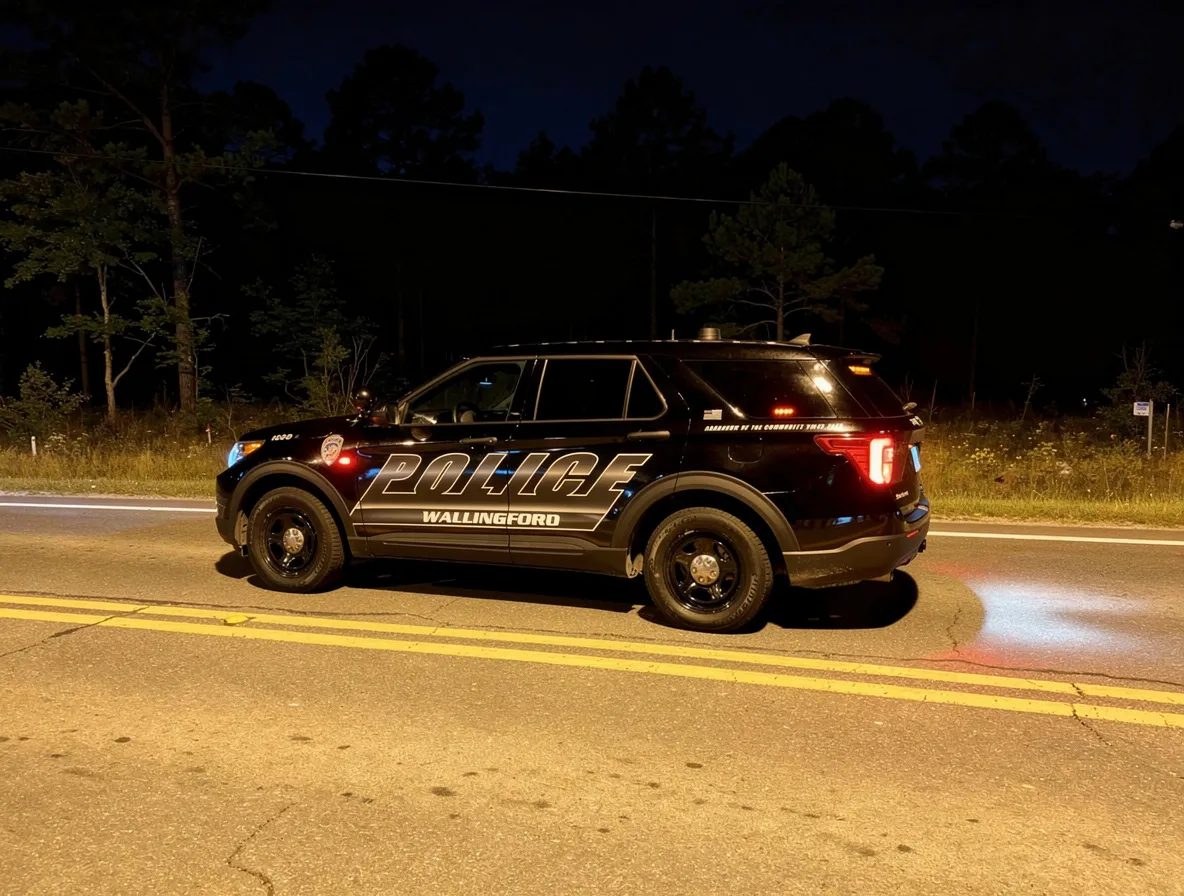
A Wallingford man faces 10 criminal charges — including seven felony counts of illegal firearm possession — after crashing his vehicle into a telephone pole on Durham Road while allegedly driving under the influence, according to Wallingford police.
Anthony Dingle, 41, was arrested on March 20, 2026, after his vehicle crossed the center of the roadway and struck a telephone pole in the 1400 block of Durham Road, causing significant damage to both the car and the pole. Dingle was the sole occupant of the vehicle and had already exited before officers arrived at the scene. No other injuries were reported.
Officers found a loaded revolver among Dingle's personal belongings outside the car. Lt. Stephen Jaques of the Wallingford Police Department confirmed that Dingle is prohibited from possessing a firearm under state or federal law — a detail that substantially escalates the legal consequences he faces beyond a standard DUI arrest.
Wallingford Police File 10 Charges, Including Seven Gun Felonies
Police charged Dingle with operating a motor vehicle under the influence of alcohol and/or drugs; seven counts of criminal possession of a pistol or revolver; carrying a pistol without a permit; and carrying a dangerous weapon in a motor vehicle — a total of 10 charges arising from a single roadside investigation.
The firearms charges are the most serious. Criminal possession of a pistol or revolver is a class C felony under Connecticut law, carrying a maximum penalty of 10 years per count. Carrying a pistol without a permit is a class D felony, with a maximum of five years. A DUI charge can add fines, license suspension, and potential jail time — with harsher penalties depending on prior history.
Dingle was released after posting a $25,000 surety bond. He is scheduled to appear in New Haven Superior Court on March 31, 2026.
Prohibited Possessor Status a Key Factor
Lt. Jaques's confirmation that Dingle is prohibited from possessing a firearm is a critical element of the case. Under Connecticut General Statutes and federal law, certain individuals — including those with prior felony convictions and those subject to qualifying court orders — are barred from owning or carrying firearms. Possession by a prohibited person triggers mandatory additional charges and often affects sentencing outcomes.
Police did not specify the basis for Dingle's prohibited status in the initial arrest report. That information is expected to become part of the public record as the case moves through the courts.