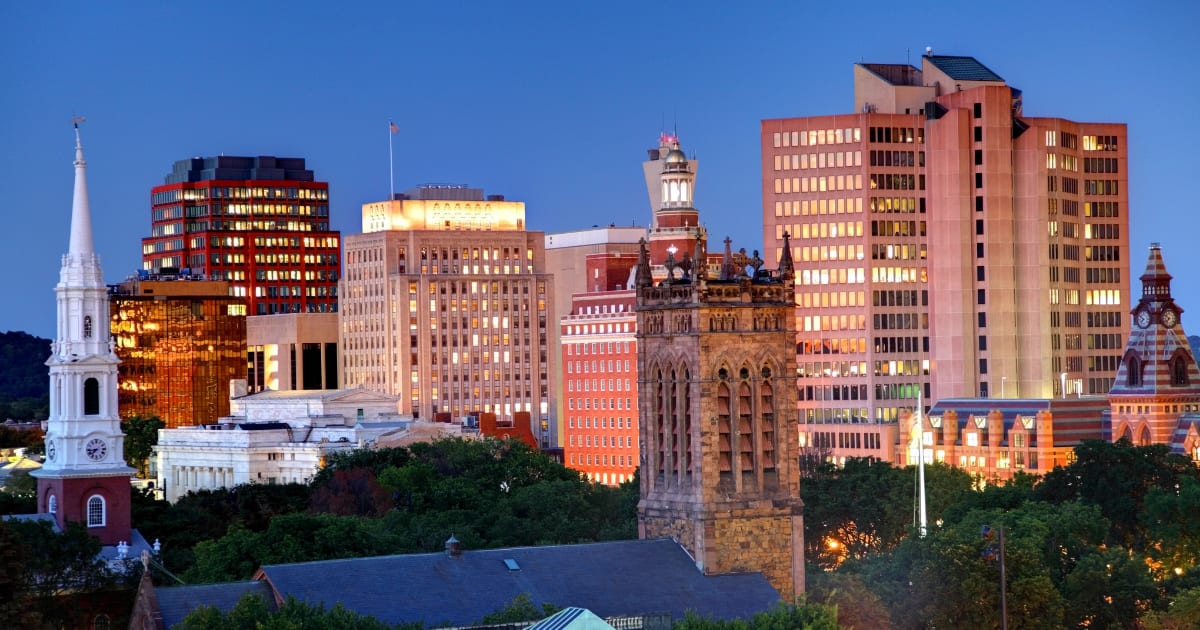
New Haven's Winston Opens as Hill Neighborhood Apartment Project Collapses
While high-end rentals like The Winston attract interest, stalled developments highlight uneven investment across neighborhoods.
Private capital is flowing into downtown-adjacent areas while neighborhoods further from the core continue to struggle
New Haven Luxury Apartment Market Shows a Tale of Two Neighborhoods
New Haven's luxury apartment market is producing sharply divergent outcomes depending on location. At the redeveloped Winchester Center, The Winston — a 283-unit luxury building — has been welcoming tenants since January 2026 and is generating strong interest from renters seeking high-end accommodations downtown. Less than three miles away, a developer abandoned a 194-unit complex planned for the Hill neighborhood on March 31, 2026, citing rising interest rates, construction costs, and three years of failed efforts to find an investment partner.
The contrast illuminates a divide that housing advocates have long warned about: private capital is flowing into downtown-adjacent areas while neighborhoods further from the core continue to struggle to attract large-scale development.
The Winston: New Life at Winchester Center
The Winston began accepting tenants in January 2026, with just three units occupied as of early March, when the New Haven Independent published a feature on the newly opened building. The 283-unit complex sits on the northern edge of a redeveloped block that formerly housed the historic Winchester Arms factory on Winchester Avenue.
As part of the Winchester Center redevelopment, a new east-west street named Mason Street was completed, connecting Winchester Avenue to Mansfield Street. A pocket park called Mason Place was built to the south of the new street, adding green space to a block that had been industrial for generations.
The Winston has quickly joined 360 State, Olive and Wooster, and a handful of other buildings in online conversations among renters seeking high-end units in New Haven. Community discussions on Reddit's r/newhaven in late March 2026 showed multiple prospective tenants comparing The Winston, 360 State, Curio 269, and other buildings, with questions focusing on safety, sound insulation, pet policies, and value for $2,400-per-month budgets.
Hill Neighborhood Project Collapses After Three Years
The same week The Winston's feature coverage ran, developer John Lockhart of Catalina Buffalo Holdings — an Avon-based, family-run firm — announced he was abandoning a 194-unit apartment project planned for the Hill neighborhood.
Lockhart had purchased nine properties for $4.35 million in 2023 after the project received City Plan Commission site plan approval in October 2022. The properties, located along Davenport Avenue and Congress Avenue, were acquired with the intent to build a substantial new housing complex in one of New Haven's historically underserved neighborhoods.
But over three years, Lockhart was unable to secure an investment partner. He cited rising interest rates, increased construction costs, and a property tax revaluation that changed the financial picture for the project. On March 31, 2026, he announced he would sell all nine properties separately, estimating a loss of approximately $2.5 million.
"We're taking a massive financial loss and just moving on," Lockhart told the New Haven Independent. As of March 31, two buyers were already under contract for five of the nine properties. The fate of the remaining four parcels and their eventual use has not been determined.
What the Divergence Means for New Haven Housing
The gap between the Winchester Center success and the Hill project failure reflects broader patterns in urban real estate. Downtown-adjacent sites with improving infrastructure — like the newly completed Mason Street — tend to attract developer confidence and renter demand more readily than neighborhoods without the same amenities or visibility.
For the Hill, the collapse of the 194-unit project means 194 fewer apartments that could have added supply to an area where affordable and market-rate options are both limited. Whether the nine parcels will eventually be redeveloped by new buyers — and at what scale — remains an open question.
City officials have not announced any response to the project's abandonment or plans to incentivize development in the Hill.