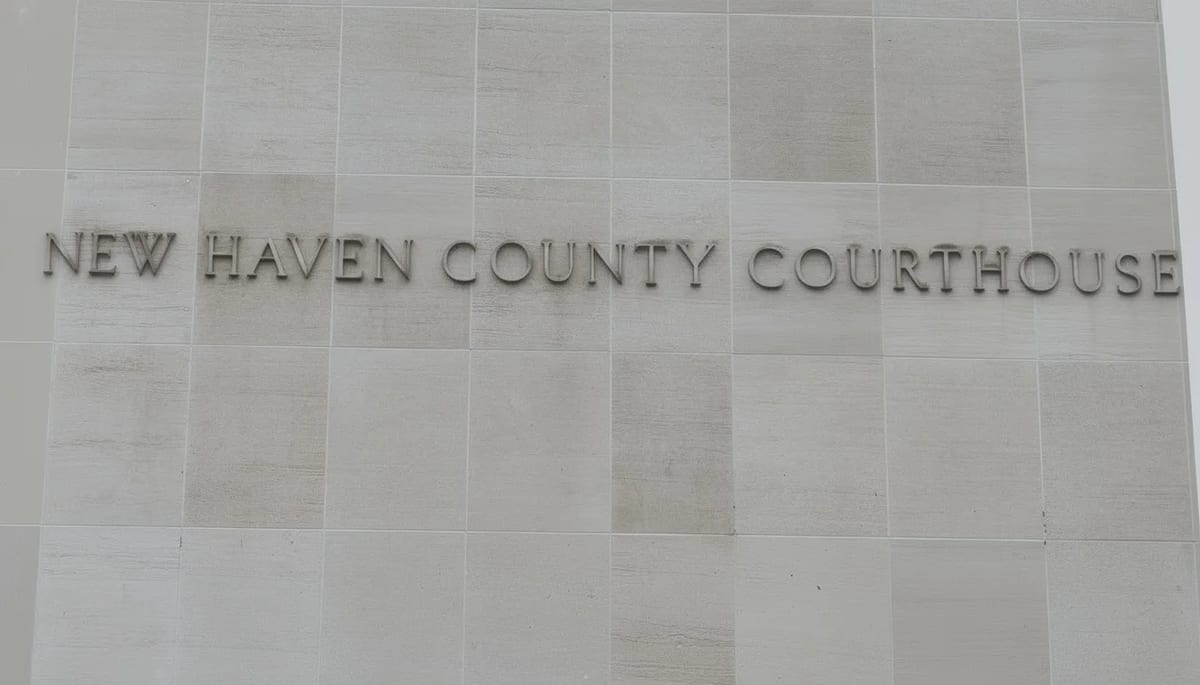
Claims Commissioner Robert Shea found that Connecticut owes Maceo 'Troy' Streater $5.75 million for 23 years in prison for a 1990 murder he has always maintained he did not commit.
New Haven Alder's Wrongful Conviction Compensation Advances
Connecticut's Claims Commissioner has recommended that the state pay New Haven Alder Maceo "Troy" Streater more than $5.75 million for the 23 years he spent incarcerated for a 1990 murder that multiple witnesses have since said he did not commit -- and the state Judiciary Committee is now considering whether to approve the award.
Claims Commissioner Robert Shea issued the $5.75 million finding on February 10, 2026. The state Senate's Judiciary Committee is slated to review the recommendation at a public hearing before voting on whether to approve the payout.
The Original Case
Streater was convicted of the 1990 murder of Terrance Gamble, a 19-year-old who was shot to death in New Haven's Newhallville neighborhood. Prosecutors built their case on the testimony of four witnesses who placed Streater at the scene.
All four witnesses later recanted their testimony. Despite the recantations, Streater remained incarcerated. He has maintained his innocence throughout.
Two of the detectives involved in building the original case -- Joseph Greene and Anthony DiLullo -- have since been implicated in other wrongful convictions. Cases tied to both detectives have been overturned due to findings of police and prosecutorial misconduct.
Streater was ultimately released and later received a pardon. He now serves as the Alder for New Haven's 21st Ward.
Detective's Widow Testifies in Support
A significant moment in Streater's compensation effort came on February 27, 2026, when Lisa DiLullo -- the widow of late Detective Anthony DiLullo -- appeared before the state Judiciary Committee and testified on Streater's behalf.
DiLullo corroborated the recantations of the witnesses who originally testified against Streater. She alleged that her late husband and other detectives coerced the witnesses into providing their initial statements -- a claim that, if accurate, would mean the foundational evidence used to convict Streater was obtained through misconduct.
Her testimony is notable because she has no apparent stake in the outcome of Streater's case. As the widow of one of the detectives whose conduct is being scrutinized, her willingness to come forward and support the recantations adds weight to Streater's claim that the original prosecution was tainted.
DiLullo testified before the Judiciary Committee the same week she also spoke publicly about broader allegations of misconduct within the New Haven Police Department.
The Compensation Process
Under Connecticut law, individuals who have been wrongfully convicted and incarcerated can seek compensation from the state through the Claims Commissioner's office. The commissioner reviews the facts of the case, determines whether the state bears responsibility, and recommends an award. The award must then be approved by the state legislature's Judiciary Committee before it can be paid.
Claims Commissioner Robert Shea's $5.75 million recommendation represents his determination that Streater was unjustly incarcerated and that the state is liable. The Judiciary Committee's vote will be the next step in the process.
Separately from the state compensation claim, Streater has also filed a $100 million civil lawsuit against the city of New Haven, according to reporting by the New Haven Independent and Patch. That case is proceeding on a separate legal track from the state compensation proceeding.
Broader Context
The Streater case is part of a broader examination of convictions linked to detectives Greene and DiLullo. Other men whose cases were handled by the same detectives -- including Daryl Valentine and Stefon Morant -- have had their convictions overturned due to similar misconduct findings.
The pattern of overturned convictions connected to New Haven detectives from that era has drawn scrutiny from civil rights advocates and legal observers who argue it reflects systemic problems in how the department investigated and prosecuted homicide cases in the late 1980s and 1990s.
Streater's case is the most prominent in which a compensated victim has gone on to hold elected office. As a sitting Alder, his pursuit of compensation for his wrongful conviction has brought sustained public attention to questions about accountability for past misconduct in the city's police department.
Got a tip? Reach out to us at tips@thequinnipiacpost.com.
Never miss New Haven news
Free local news delivered to your inbox — no spam, unsubscribe anytime.