Durham to Hold Public Hearing on Automated Traffic Camera Ordinance — Rescheduled to March 2
The Board of Selectmen will hear public comment on a proposed speed and red-light camera ordinance under CGS 14-307c; the original Feb. 23 hearing was postponed due to the winter storm
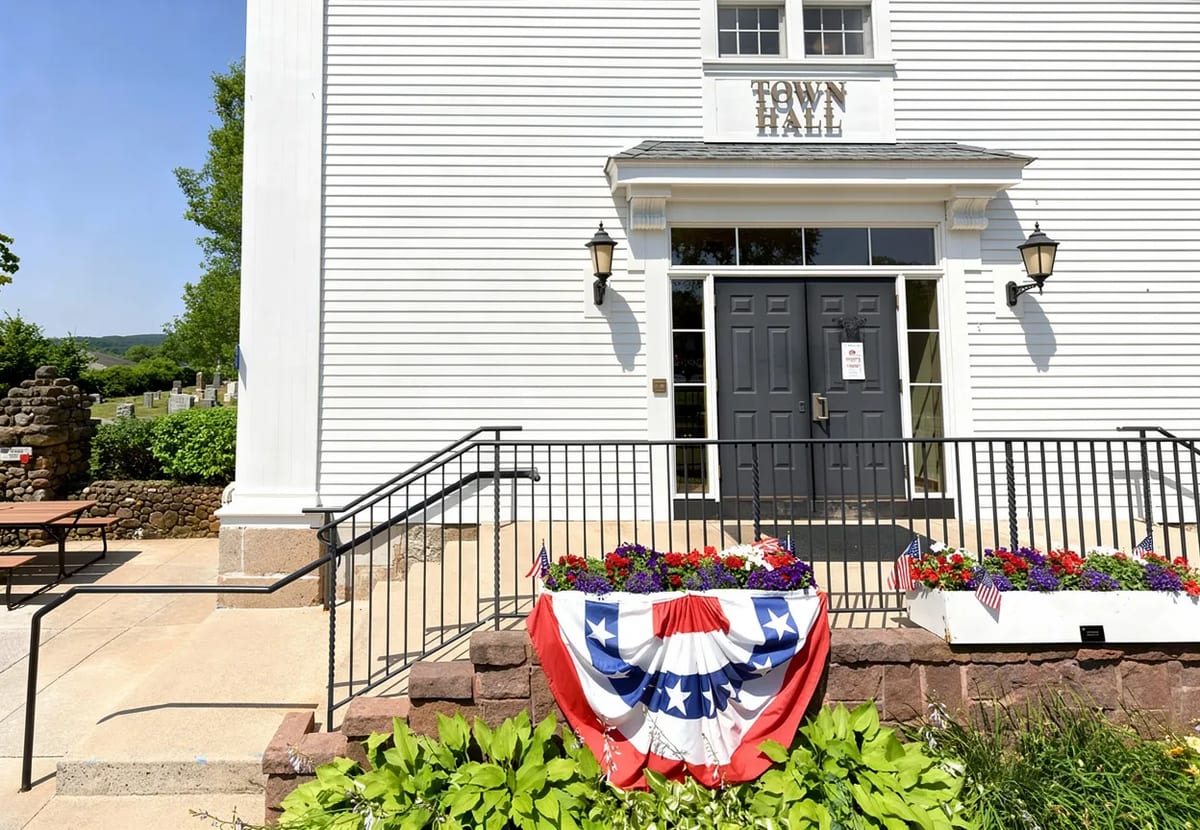
Durham Town Hall
Durham Board to Hear Public Comment on Traffic Camera Proposal
The Durham Board of Selectmen is set to hold a public hearing on a proposed ordinance that would authorize the use of Automated Traffic Enforcement Safety Devices — speed and red-light cameras — at locations throughout town. The hearing is a required step under state law before a municipality can move forward with the program. No vote is expected at the public hearing.
The proposal operates under Connecticut General Statutes Section 14-307c, a law enacted by the state legislature under Public Act 23-116. First Selectman Brendan Rea has presided over recent board sessions as Durham weighs the decision.
How Durham’s Traffic Camera Program Would Work
Under CGS §14-307c, any Connecticut municipality can deploy automated traffic enforcement cameras by following a specific state-supervised process: hold a public hearing, adopt a local ordinance, identify camera locations, and submit a formal plan to the Connecticut Department of Transportation’s Office of State Traffic Administration for approval. The state has final say over where cameras are actually placed.
Cameras capture license plates of vehicles committing violations. Citations are issued to the registered owner of the vehicle — similar to a parking ticket — without requiring a police officer to be present or pull a driver over.
Under the state program, the first 30 days after a camera goes live are a warning period. After that, fines can reach up to $50 for a first offense and up to $75 for each subsequent violation. An electronic payment processing fee of up to $15 may also be charged. Approved camera plans are valid for three years, and municipalities must submit annual reports to both the CT DOT and the Connecticut General Assembly.
The law permits cameras in school zones, pedestrian safety zones, and other locations identified in a town’s approved plan.
Durham Would Join a Growing List of Connecticut Towns
Several other Connecticut municipalities have already moved forward under the same statute. West Hartford has submitted a plan to CT DOT that includes approximately 15 speed camera locations; the state is expected to render a decision on that plan by mid-March 2026. Marlborough adopted its own ATESD ordinance in March 2025 and was among the first towns in the state to do so.
Durham’s upcoming hearing puts it in the early stages of a process that, depending on the board’s vote and DOT approval, could eventually bring automated enforcement to local roads.
What Durham Has Not Yet Decided
The board has not announced a timeline for a vote on the ordinance. Durham has not disclosed which specific locations it is considering for cameras, what enforcement vendor it might use, or what projected costs or fine revenues would look like.
What Comes Next
If the Board of Selectmen votes to adopt the ordinance, Durham would then need to develop a camera placement plan and submit it to CT DOT for review. That review process can take several months. Cameras cannot be activated until the state approves the plan.
For Durham residents who want to follow the process, the town publishes Board of Selectmen meeting agendas and documents on its official website.
Hearing Rescheduled Due to Winter Storm
Due to the winter storm, the public hearing originally scheduled for February 23, 2026 has been postponed. The hearing will be held on Monday, March 2, 2026, at 7:30 p.m. at the Durham Community Center, 144 Pickett Lane.