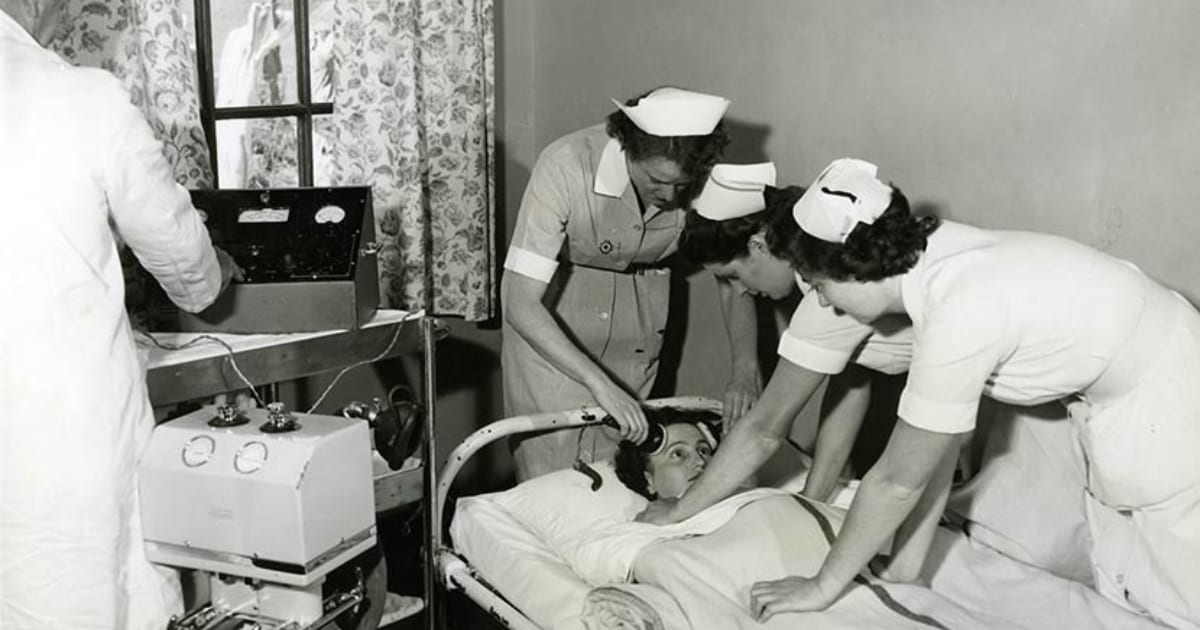
Statewide, involuntary electroconvulsive therapy petitions more than doubled since 2015 as legislative debate intensifies
New Haven ECT Petitions Nearly Quadrupled in a Decade
New Haven probate courts handled 35 petitions for involuntary electroconvulsive therapy in the first nine months of 2025, up from nine petitions in all of 2015, according to data from the state Office of the Probate Court Administrator obtained through a Freedom of Information request by Inside Investigator.
The New Haven figures are part of a statewide increase in court-ordered ECT. Across Connecticut, 174 petitions for involuntary electroshock treatment were filed from January through September 2025. In 2024, probate courts approved 193 such petitions, more than double the 81 approved in 2015, according to Inside Investigator's reporting published in March 2026.
New Haven's probate court saw a steady climb in ECT petitions over the past several years, rising from 24 cases in 2018 to a peak of 50 in 2023 before declining to 42 in 2024, according to data reported by the CT Examiner in February 2026.
How Court-Ordered ECT Works in Connecticut
Under Connecticut law, electroconvulsive therapy can be administered without a patient's consent if the head of a psychiatric hospital and two qualified physicians determine the patient is incapable of giving informed consent and no less intrusive treatment is available. A probate court judge must approve each petition.
Current law limits each court authorization to 45 days, after which a new petition must be filed for continued treatment. Voluntary patients must renew their consent every 30 days.
Yale New Haven Psychiatric Hospital is among the facilities where ECT is administered in the state. Other hospitals offering the treatment include Connecticut Valley Hospital and Whiting Forensic Hospital in Middletown, the Institute of Living in Hartford, and Middlesex Health Interventional Psychiatry Services.
Middletown, home to the state's primary psychiatric facilities, saw the largest share of petitions, jumping from 40 cases in 2024 to 72 in the first nine months of 2025. Hartford's caseload rose from 25 in 2018 to 46 in 2019, according to Inside Investigator data.
Legislative Battle Over ECT Authorization
The rise in involuntary ECT has sparked competing legislative efforts in Hartford. During the 2025 session, the Public Health Committee held hearings on HB 6837, a bill that would double the maximum duration of court-ordered ECT authorization from 45 days to 90 days. The Connecticut Hospital Association supported the bill, arguing that the current 45-day limit can impede patient care for severe conditions like unresponsive catatonia.
Opponents argued the bill would weaken due process protections for patients. Stephen Mendelsohn, a disability rights advocate, testified that extending the authorization period could lead to multiple rounds of ECT without proper oversight.
Separately, State Sen. Cathy Osten, D-Sprague, proposed SB 1070, which would have prohibited electroshock therapy without a patient's written informed consent. That bill failed to advance beyond the Public Health Committee.
Kathy Flaherty, executive director of the Connecticut Legal Rights Project, has raised concerns about the informed consent process. "When it comes to involuntary ECT, nobody actually gives informed consent for the administration," Flaherty said, according to the CT Examiner.
One Patient's Case Draws National Attention
The human stakes of involuntary ECT have drawn scrutiny in individual cases. According to a court complaint filed by attorney Virginia Teixeira and reported by Inside Investigator, one patient identified as Levesque received involuntary electroshock treatment approximately 500 times since 2015 and was required to attend probate hearings every 45 days for continued authorization.
The case illustrates the cycle created by Connecticut's current authorization structure: each 45-day period requires a new petition, court review, and judicial approval, creating what advocates describe as serial proceedings that can continue for years.
Scope of Involuntary ECT Expanding Across Connecticut
The geographic reach of involuntary ECT petitions has also expanded. In 2015, petitions were filed in 10 different probate courts across the state. By 2024, that number had grown to 17 courts, before dropping to 13 in the first nine months of 2025, according to Inside Investigator.
Much of the growth came from courts outside Middletown. Farmington, where UConn Health administers ECT in-house, saw increasing petition filings. The spread of petitions across more courts reflects broader use of ECT at additional facilities beyond the state's primary psychiatric hospitals.
Jim Flannery, a mental health advocate, documented the experiences of patients who underwent forced psychiatric treatment in his 2020 film "Voices for Choices." The film brought attention to the involuntary treatment system in Connecticut and the perspectives of those who have undergone compulsory ECT.
No legislative hearings or policy proposals related to ECT have been scheduled for the 2026 session as of early March.
Got a tip? Reach out to us at tips@thequinnipiacpost.com.
Never miss New Haven news
Free local news delivered to your inbox — no spam, unsubscribe anytime.