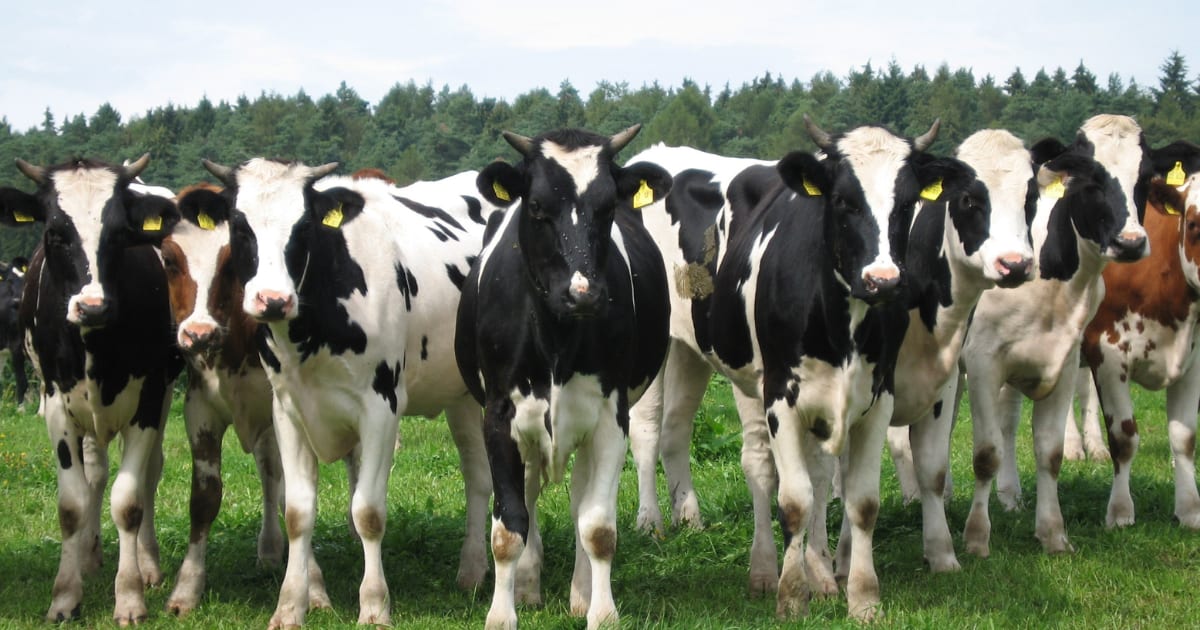
A coalition of Connecticut dairy farmers, including Bishop's Orchards of Guilford and Cushman Farms of Franklin, say the state's 80 remaining dairy operations could disappear without immediate legislative intervention.
Connecticut Dairy Farmers Warn of Industry Collapse, Push for $20 Million in State Aid
Connecticut's dwindling dairy farming community is pushing the state legislature to approve a $20 million agriculture sustainability investment and a refundable tax credit, warning that without immediate support the state's remaining dairy operations — numbering about 80 — could cease to exist.
Farmers made their case publicly in recent weeks, with coverage from NBC Connecticut and the Hartford Courant documenting the scope of the crisis. Connecticut dairy farmers are projected to lose a collective $20 million this year due to rising fuel and fertilizer costs and depressed milk prices.
Guilford's Bishop's Orchards Among Those Sounding the Alarm
Keith Bishop, president of Bishop's Orchards in Guilford, is among the farmers who have spoken publicly about the industry's challenges. He said that farmers typically cannot pass rising input costs on to consumers, leaving farms squeezed between higher expenses and prices set by national commodity markets.
Fuel and fertilizer prices have climbed in recent years as a result of global supply chain pressures, and Bishop and others say Connecticut's small-scale, high-cost farming environment makes their operations particularly vulnerable compared to larger producers in other states.
Bishop's Orchards is one of the region's established family farm operations, growing a range of produce alongside its orchard operations.
A Coalition Forms Around Survival
Brandon Smith, a fourth-generation farmer at Cushman Farms in Franklin, is part of a statewide coalition called "Very Alive," which has united dairy farmers to lobby for state intervention. Smith said his farm is looking at a $1 million loss this year.
"Connecticut dairy farming could disappear within three years without support," Smith has warned.
Seth Bahler of Oakridge Dairy added that Connecticut's dairy industry has collectively invested approximately $50 million in recent years to sustain operations for future generations, but said the current economic climate makes long-term viability uncertain.
The Legislative Ask
Farmers are asking the General Assembly to create an agriculture sustainability line item of $20 million that would provide immediate relief, along with a refundable tax credit structure designed to support long-term farm economics.
Connecticut currently has only about 80 dairy farms, down significantly from earlier decades. USDA data confirms the continued attrition of dairy operations in New England as smaller farms are unable to compete with commodity pricing set by national markets dominated by large-scale producers.
The Courant reported in early March that lawmakers were reviewing several proposals in response to the farmers' lobbying campaign, though no specific legislation had advanced to a committee vote as of the date of those reports.
The Economic Pressures
Dairy farmers operate in a market where the price they receive for milk is largely determined by federal order pricing tied to national supply and demand. When input costs rise — particularly fuel and fertilizer, which are tied to energy markets — farmers absorb the difference because they cannot unilaterally raise the price of milk.
Connecticut's geography and land costs make farming more expensive than in many other states, and the loss of even one farm can mean the permanent removal of that land from agricultural use as development pressure pushes property values higher.
Farms in Connecticut also contribute to land conservation, agritourism, and local food supply chains. The loss of dairy operations would have ripple effects across the state's agricultural economy.
What Guilford and Neighboring Towns Stand to Lose
Guilford's agricultural community includes farms like Bishop's Orchards that have operated for generations and serve as anchors for local agritourism. A reduction in the state's dairy farm count would hit communities like Guilford that have long valued their agricultural character alongside their coastal and residential identities.
No action on the $20 million proposal had been announced as of March 2026.
Got a tip? Reach out to us at tips@thequinnipiacpost.com.
Never miss Guilford news
Free local news delivered to your inbox — no spam, unsubscribe anytime.